
City sends thousands of litres of confiscated alcohol down the drain
25 May 2017
The City of Cape Town’s Law Enforcement Department today started disposing of 12 000 bottles (8 169 litres) of alcohol confiscated over the past few months.
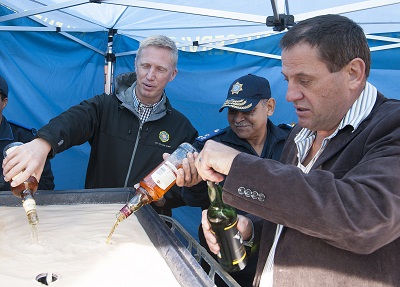
Liquor destruction
© City of Cape Town
In terms of the City’s by-laws, the introduction, possession and consumption of liquor on beach areas is prohibited and offenders will have their liquor confiscated and receive a written notice to appear in court, with a fine of R500. The City’s regulations make provision for the public to collect their confiscated alcohol from the pound within three months, provided they pay a release fee of R1 400.
‘Not surprisingly, we don’t receive many requests to reclaim alcohol, which is why the pound is bursting at the seams. We’ve investigated the option of selling the alcohol and investing the money into our social services programmes but the red tape is prohibitive, in addition to ethical and logistical considerations. So, the next best thing is to destroy the alcohol,’ said the City’s Mayoral Committee Member for Safety and Security; and Social Services, Alderman JP Smith.
The alcohol will be decanted into containers, each of which have a 1 000 litre capacity, and then transported to the Vissershok landfill site by an external service provider for final disposal.
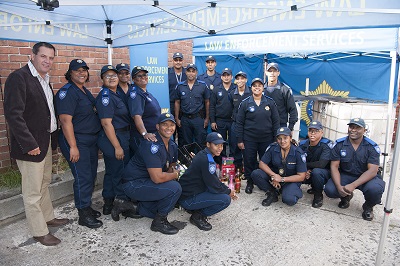
The Law Enforcement team
© City of Cape Town
‘The City takes no joy in an exercise like this. Not only do we have to invest significant resources into our festive season policing plan to save intoxicated people from themselves, but it also costs us time and money to get rid of the alcohol. Every year we confiscate more alcohol over the festive season than the previous one, in spite of ongoing warnings about the fact that it is not only illegal to drink in public, but very dangerous too. While it is a feather in the cap of our enforcement staff, it also raises more questions than answers about society’s regard for the law and its relationship with alcohol,’ added Alderman Smith.
The City of Cape Town has a number of ongoing interventions that form part of its Alcohol and Other Drug Strategy. The strategy is aligned to the National Drug Master Plan and aims to reduce the health, economic and social burden caused by alcohol and drug use within the municipal region. It is also in line with our new Organisational Development and Transformation Plan which seeks to be even more proactive in tackling social issues by taking services directly to residents. The interventions include:
- operations to combat drunk driving
- alcohol confiscations from beaches and other public spaces
- treatment for alcohol and drug abuse at six sites in Tafelsig, Khayelitsha, Milnerton, Parkwood, Delft South and Manenberg
- a 24-hour substance abuse helpline that is available on 0800 435 748
- soft skills programmes aimed at school children to explain the effects of alcohol abuse on babies, with a specific focus on foetal alcohol syndrome
- by-law enforcement
End
Published by: