
Children’s rights can’t be wrong
20 November 2019
Hundreds of children descended on Athlone Stadium on Wednesday 20 November 2019 for an event to mark World Children’s Day.
Organised by the City’s Social Development and Early Childhood Development Department, the event combined learning through play and activities for 350 learners from 35 City-owned Early Childhood Development Centres (ECDs) around the city.
World Children’s Day was established in 1954. It is commemorated on 20 November annually to promote global togetherness, awareness among children worldwide, and improving children's welfare.
In South Africa, every child has the right to basic nutrition, shelter, healthcare and social services, as well as the right to be protected from maltreatment, neglect, abuse or degradation.

Legislation like the Children’s Act, Child Justice Act and the Sexual Offences Act are in place to protect children.
‘These protections are guaranteed by the Constitution, but we know that the reality for many of our children is very different. Teaching children about their rights and how they can protect themselves is meant to empower them so that they can identify when their rights are being abused, and can speak out against such abuses.
‘A lot of the conversation around child rights seems focused on spanking, as we’ve seen in recent months following the Constitutional Court ruling on the matter. But child rights constitute far more than that one particular element, as outlined in the Bill of Rights. I think it is important that children know that, but adults too and that we all work harder to hold ourselves and others accountable in protecting the rights of children,’ said the City’s Mayoral Committee Member for Community Services, Councillor Zahid Badroodien.
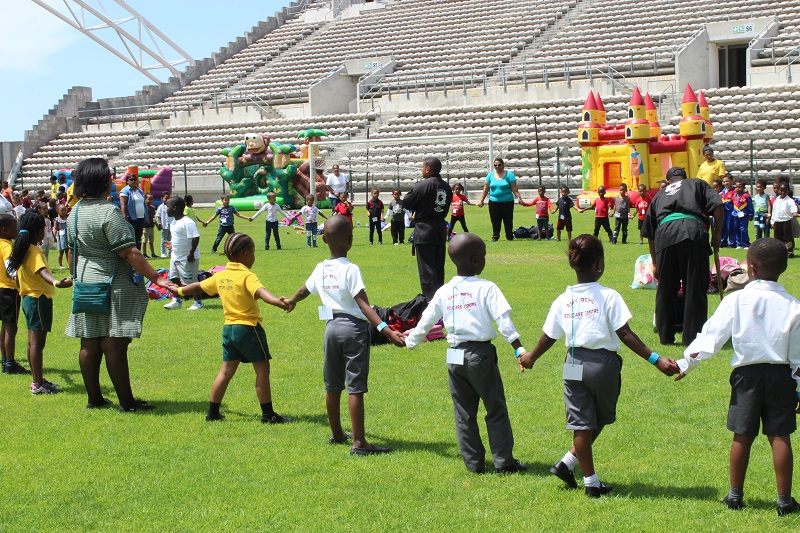
The City’s World Children’s Day event focused on a number of topics pertinent to child welfare and their general safety and well-being, including:
Anti-Bullying
The anti-bullying puppet programme helps children learn ways to respond if they are being bullied; how to help if they see someone else being bullied; the difference between telling and tattling, and most importantly, that no one ever deserves to be bullied.
Self Defence
Although it is never a good idea to encourage your child to fight, there are certain self-defense techniques they can use to protect themselves when attacked. Instructors taught them techniques for blocking a punch, removing a bully’s fingers from their wrists as well as techniques on how to get free when being restrained and defending themselves from a group attack.

I know my rights
The session focused on the following important points according to Section 28 in the Bill of Rights in the Constitution of South Africa:
- A right to family care, love and protection and the responsibility to show love, respect and caring to others, especially the elderly.
- A right to a clean environment and the responsibility to take care of their environment by cleaning the space they live in.
- A right to food and the responsibility not to be wasteful.
- A right to good quality education and the responsibility to learn and respect their teachers and peers.
- A right to quality medical care and the responsibility to take care of themselves and protect themselves from irresponsible exposure to diseases such as HIV/Aids.
- A right to protection from exploitation and neglect and the responsibility to report abuse and exploitation.
Body Awareness
The programme aims to empower children to develop coping mechanisms and skills to keep safe. Many children face challenges which requires safe thinking. This programme allows for awareness of sexual abuse and empowers children with the knowledge of how to report it.
The team engages in songs and dancing, illustrating the 107 Public Emergency Communication Centre number, body awareness and personal space rules.
My Network Hand
My network hand is an activity that will help children to identify a support system that they can use if they need help. It requires them to identify ‘network people’ such as parents or guardians, family members, teachers, and so on. The network people should be adults they trust and who listen to them. This can be used as a tool for safeguarding or simply to open a conversation about the key people in a child’s life and how they can support the child’s health needs. It is designed to facilitate conversations about how:
- We all have the right to feel safe all the time
- We can talk with someone about anything, even if it feels awful or small
I live smart
In I Live Smart, Beauty and Geo – along with the Aquarium’s mascots Silver the Shark, Terminator the Seal, Samantha the Penguin and Balo the Clownfish – teach us about living smartly through lessons about waste, water, electricity and biodiversity. The interactive dialogue allows children to become part of the storyline and to learn valuable lessons when it comes to smart, environmentally friendly living.
End
Published by: