
Cape Town Mayor launches specialised units for SWAT, drones
7 October 2026
New SWAT and aerial surveillance units launched
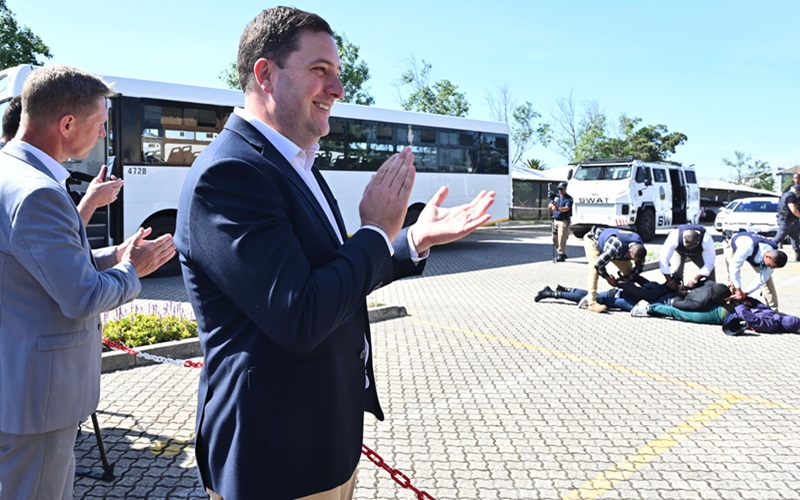
Cape Town Mayor Geordin Hill-Lewis today launched the City’s new specialised SWAT and aerial surveillance units, together with Alderman JP Smith, Mayoral Committee Member for Safety and Security.
The Special Weapons and Tactics (SWAT) unit will provide highly-skilled support for serious crime and high-risk incidents beyond conventional policing, while the Metro Police Aviation Unit focuses on aerial surveillance for faster, safer and smarter ways to combat crime.
‘I was pleased to see the City’s new specialised units in action today. The City will continue doing whatever it takes to make Cape Town safer, and will stop at nothing to build our resources and powers, because that is what the public deserves and needs.
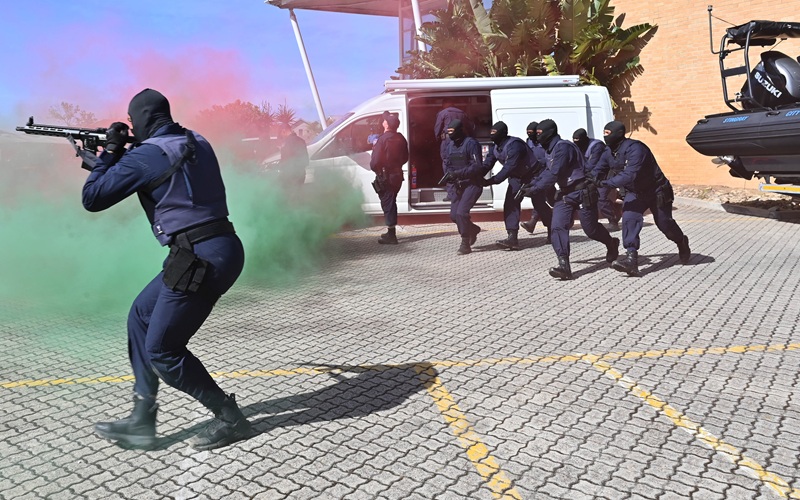
‘These highly-skilled SWAT and aerial surveillance units form part of our broader safety investments, including over 1 300 new City police officers added in this term of office, a new Highway Patrol unit, major safety technology rollout, and a new state-of-the-art digital nerve centre to coordinate all City policing operations.
‘The City’s growing policing capacity clearly shows that our officers are ready for expanded powers, especially to investigate gang, gun and drug crime. We must make full use of all policing resources in Cape Town to bring a positive change for communities living in daily fear of violent crime
‘We are also heartened by the 35% increase in SAPS requests to view our footage for police investigations over the last year. This increases the chances of successful convictions as we work to expand our digital coordination and safety technology network,’ said Mayor Hill-Lewis.
SWAT Unit
The SWAT Unit will provide support for:
- Combatting gang-related activity and extortion
- Executing high-risk warrants of arrest
- Hostage and barricaded suspects support to SAPS
- Security at high-profile events
Alderman Smith said the Unit is equipped with an armoured vehicle, modern firearms, and other advanced tech – including night vision and heat detection.
‘Expert SWAT team members have extensive SAPS Special Task Force experience, and are further supporting the City’s Training College to develop a detailed curriculum for future growth and continuity in this critical metro policing capacity,’ said Alderman Smith.
Aerial Surveillance
The Metro Police Aviation Unit includes officers with pilot certification, four types of aircraft for different operational needs, and specialised vehicles with connectivity, off-grid power, and external monitors.
The Metro Police Aviation Unit’s key support areas include:
- Crime hotspot patrols
- Crowds and events
- Suspect tracking and surveillance
- Search and rescue
- Land protection monitoring
Detection is enhanced by thermal and zoom cameras, with AI-assisted tracking and laser rangefinder to pinpoint exact locations of suspects and activity, for example in bush or across rooftops.
A live overhead picture is streamed to control centres, helping to direct and protect officers on the ground. High-resolution imagery and scene-mapping document evidence to support case dockets for investigations.
The Unit can also provide a visible aerial presence to deter crime, including loudspeaker messaging and night-spotlight.
‘Air support is a force multiplier, widening what officers can see and shortening the time to a confident, safe decision. We have seen that drone flights and surveillance support early crime-fighting successes and arrests,’ added Alderman Smith.
Early operational successes include:
- Intelligence-led arrests in Delft, Somerset West and Strand
- Drug arrest in Tafelsig
- Tracking and arrest of a wanted suspect on the run in Elsies River
- Traffic and highway incident support
- Support at beaches for liquor confiscations and enforcement
New digital nerve centre for City policing
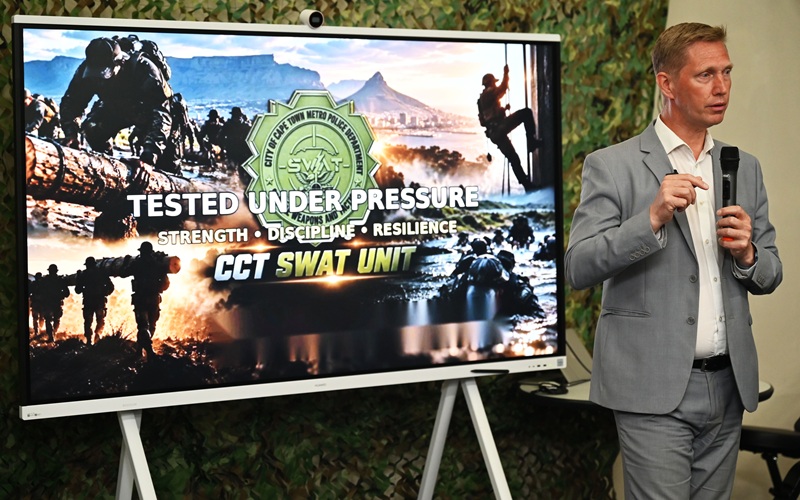
The live demonstration by new specialised units was conducted at the Joint Policing Services Operational Centre (JPSOC), the City’s new digital nerve centre which will integrate all City policing resources and safety technologies deployed throughout the metro.
The JPSOC – now in the final stages of operationalisation - will integrate a range of existing and emerging policing technologies, including:
- Drones, operated through the City’s Aviation Unit as well as third-party service providers
- Body-Worn Cameras (BWC), In-Vehicle Cameras (IVC) and Automatic Number Plate Recognition (ANPR) technology
- Citizen and Trusted Partner Apps to strengthen communication and information sharing
- Artificial Intelligence (AI) and automation
The City’s bodycam deployment will soon reach 3 000 cameras in the field, while 530 enforcement vehicles have In-Vehicle Cameras (IVCs) with Automated Number Plate Recognition (ANPR) functionality and printers for warrants and summons.
‘The various safety tech solutions we’ve introduced help create a real-time operational picture to improve situational awareness and inform decision-making. We are now at a point where officers can stream live feeds to our operations centre from their mobile cameras, augmented by drone, ANPR and CCTV footage. I am excited to see how we can keep building on this to advance public safety into the future,’ said Alderman Smith.
Published by:
City of Cape Town, Media Office